2026 Art Reflection…
Method…
My practice is rooted in self-inquiry. My methods are as abstract as the language I use. By examining identity, and internal rhythms, I create paintings through intuitive mark-making. The work emerges as a process of alignment, operating as a means of liberation through making rather than as a stated goal. Wholeness is approached as an ongoing condition between life and work.
WHICH BRINGS ME TO RECURRING QUESTIONS WITHIN MY PRACTICE, ‘HOW AM I DEEPENING MY CONNECTION TO THE WORK?’, AND ‘HOW AM I MAKING THIS VISIBLE?’.
Why Abstraction…
My visual language developed through sustained looking and reading across art history, philosophy, and holistic modes of thinking, alongside an early desire to create what I could not find represented. I was drawn to abstraction not as a style, but as a language capable of holding experience without illustration. While my early engagement was not centered on a singular theme, these references became operational rather than symbolic, informing how I think about balance, tension, and presence within both the picture plane and my daily life. The work does not illustrate belief, but registers an ongoing relationship with a higher source as felt experience. I consistently return to color, texture, and form as primary structural elements. Color operating intuitively but deliberately. repetitive, and restrictive gesture function as tools for balance and tension rather than expressive excess.
ArtSchool…
I came to formal study when intuition alone was no longer sufficient. School is providing me with critical friction; a space where my instinct is tested against history, theory, and dialogue around creation and visual culture. This pressure is sharpening my decision making and clarifying my intentions without diminishing the role of intuition. Recently, at the start of my winter semester, I’ve thought to slow my process, placing greater emphasis on intent and process.
I want The work to function not to persuade, but to align. Each piece operating as a marker, recording where I am, what I carry, and what must be released. The work exist as both practice and residue; a visible trace of internal negotiation rendered through abstraction.
Questions…
I recognize that this approach is not without limitations. At times, my commitment to abstraction and internal inquiry risks becoming insular, creating tension between intention and reception. I question whether the visual and verbal language I use invites dialogue or is inadvertently creating distance. These uncertainties prompt continual reassessment, keeping the practice open to discomfort and acknowledging that growth often emerges through unresolved or uncertain states.
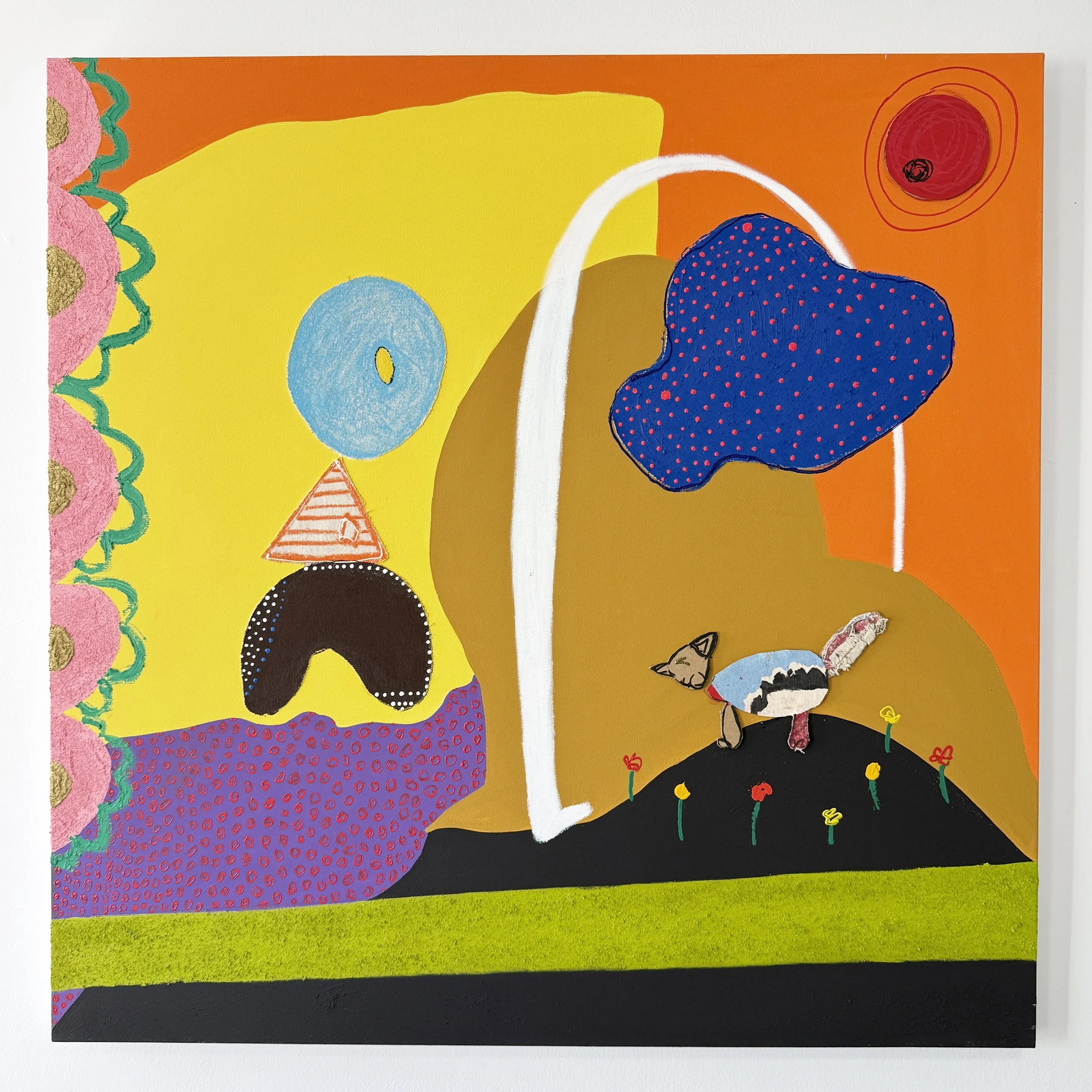
i wandered near and far to uncover the space in-between..., 2025
36” x 36”
Acrylic, Cut pieces of Canvas and CardBoard on Canvas